


Tree Risk Assessments for Property Managers: Reducing Risk for People, Property, and Budgets
Tree Risk Assessments for Property Managers: Reducing Risk for People, Property, and Budgets
Trees add beauty, shade, and environmental benefits to residential and commercial properties—but when trees are poorly maintained or structurally compromised, they pose significant safety and financial risks. For property managers, HOAs, and multifamily residential developers, understanding the health and hazards of your tree assets is not just good stewardship, it’s a necessity.
Tree Risk Assessments (TRAs) are a critical resource for proactive property management. Conducted by ISA Tree Risk Assessment Qualified (TRAQ) Arborists, TRAs help you identify hazardous trees and prioritize their maintenance.
What Is a Tree Risk Assessment?
A Tree Risk Assessment is a structured evaluation of a tree’s potential to fail and cause harm. Arborists assess biological and structural conditions that may compromise stability and determine the likelihood of tree or limb failure. Should a failure occur, the assessment accounts for potential harm to targets such as people, buildings, vehicles, and utility lines.
Components of a TRA typically include:
– Tree species and age
– Visible defects (cracks, cavities, fungal fruiting bodies)
– Root stability and soil conditions
– Crown structure and branch unions
– Proximity to infrastructure or pedestrian areas
– Recent changes (construction, drought, storm events)
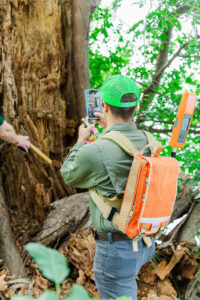
The ISA Tree Risk Assessment Qualification (TRAQ) standardizes this process, allowing arborists to assign a risk rating (Low, Moderate, High, or Extreme) based on the likelihood and consequences of failure.
Why Property Managers Should Prioritize TRAs
- Risk to Occupants and Visitors
Trees near walkways, entryways, parking lots, and playgrounds must be structurally sound. A falling branch or a complete tree failure can cause injury or worse. - Liability Mitigation
Property owners have a legal obligation to maintain their premises. If a known hazard is ignored, resulting claims can be severe. A documented TRA survey shows due diligence. - Cost Management
Emergency tree removals are significantly more expensive than planned maintenance. Risk assessments help prioritize which trees to prune, support, or remove, extending the life of healthy trees and controlling costs. - Insurance Considerations
Many insurance policies require proof of risk mitigation efforts after storm-related losses. A TRA program helps establish a baseline and response framework.
Levels of Assessment
TRAs can vary in depth depending on the situation:
– Level 1: Limited Visual Assessment
A walk-by or drive-by scan to flag obvious hazards. Useful for large properties with limited access.
– Level 2: Basic Visual Assessment
The most common TRA, involving close-up inspection with basic tools (mallet, probe, binoculars). Includes written documentation and recommendations.
– Level 3: Advanced Assessment
Involves specialized tools like resistograph drills, sonic tomography, or root radar to examine internal decay or root health.
Tree Mann Solutions is certified to conduct all three levels and advises on which is appropriate for your site and risk profile.
When to Schedule Tree Risk Assessments
– Annually, especially before storm or hurricane season
– After major weather events like windstorms, ice storms, or droughts
– Before property acquisition or sale
– Before planned construction or major landscaping
How to Implement a Risk Management Program
- Inventory All Trees on Property
Use a tree inventory to identify species, condition, and proximity to high-traffic areas. - Schedule Regular TRAs
Work with a Certified Arborist to create a recurring inspection plan. Ideally before the storm season and in response to events. - Prioritize Actions by Risk Level
Not all trees need immediate intervention. Focus on “High” and “Extreme” risk trees near targets first. - Keep Documentation
Maintain written reports, photos, and action logs. This provides a legal record and supports insurance claims. - Educate Maintenance Staff
Groundskeepers should be trained to recognize signs of decay, leaning, or new root exposure.
Services Provided by Tree Mann Solutions
We offer turnkey risk assessment and mitigation programs for:
– Apartment complexes and condos
– Office parks and corporate campuses
– Homeowners’ associations
– Institutional and healthcare campuses
– Retail centers
Our services include:
– Tree inventory and risk mapping
– TRA reports and recommendations
– Permitting assistance for removals
– Ongoing monitoring of preserved trees
– Coordination with insurance or legal teams
Trees can be a tremendous asset or costly liability. For property managers, regular Tree Risk Assessments offer a clear path to managing both. With professional insight, documentation, and action planning, TRAs help you maintain beautiful and financially sustainable landscapes.
Partner with Tree Mann Solutions for a proactive, compliant, and cost-effective tree risk management strategy. Contact us today to schedule your site evaluation.
Share this Post

